Guide ·
No shop is the cheapest, and the numbers are not close
We track ten thousand products that more than two shops sell at once. The single shop that most often has the lowest price still loses that contest about nine times out of ten.
Everyone has a shop they trust to be cheap. It is usually the one that was cheap the last time they looked, which is a sample of one. When you line up every product that at least three of the shops we track are selling right now, and ask which shop holds the lowest price on each, the answer is not one shop. It is a long, flat list.
The leader wins about one product in nine
The shop at the top of that ranking holds the best price on roughly a ninth of the shared products. Second and third are barely behind it, and after that the share falls away slowly across a dozen more shops. There is no runaway winner, and there is no shop you can pick once and stop thinking about. The leader also changes: a shop that clears a season goes to the top of the list for a few weeks and then drops back.
Big chains and small shops both win
The ranking mixes the large European platforms with specialist sneaker shops and national sports chains, from several countries. Size is not what decides it. A specialist with a tenth of the catalogue wins whenever it has decided to clear a particular model, and the platform that is cheapest on a running shoe is regularly beaten on a terrace classic by a shop you have never ordered from.
Why the leader keeps changing
Three things move a shop up and down that ranking, and none of them is a permanent policy. The first is the clearance cycle: a shop that decides to end a season goes to the top of the list for a few weeks across everything it is clearing, then falls back once the stock is gone. The second is geography — the same retail group runs separate sites per country, with separate buying, separate sales and sometimes startlingly different prices for one shoe. The third is simply which shoes a shop chose to buy deep on, because the model it over-ordered is the model it discounts.
None of that is visible from inside one shop. It is only visible by watching all of them at once, every day, which is the entire reason this site exists.
The cheapest listing is not always the best offer
A price attached to two remaining sizes is not really a price for most people, and it is the single most common shape the lowest number takes. Before treating a low figure as the answer, check that your size is among the ones that shop still has, and check when we last looked — a clearance size can be gone within hours of the check that found it. A slightly higher price with the full size run and stock in three shops is very often the better buy, and it will never be the first row you look at.
What this is actually good for
- Check the shoe, not the shop. The shop that was cheapest on your last pair tells you very little about this one.
- Loyalty to one retailer costs money on almost every purchase where three or more of them stock the same thing.
- A shop being expensive on one model is not evidence it is expensive generally — it may hold the lowest price on the next thing you want.
- Where a shop has a full size run and a low price at the same time, that is the rare combination worth acting on quickly.
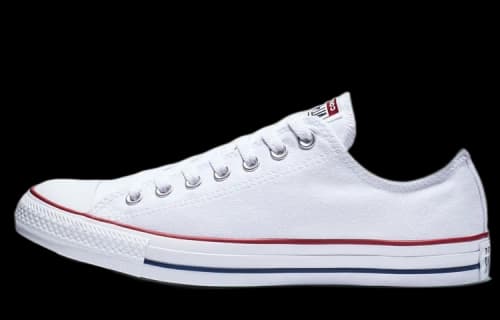
Three staples that several shops stock at once. Open one and read down the offers: the order is rarely the one you would guess.


Where to see the whole picture: