Guide · ·
EU 42 is three different UK sizes, depending on the brand
The same European number converts to UK 7.5 at Nike, UK 8 at adidas and UK 8.5 at Converse. If you buy from a British shop by converting in your head, this is where the mistake happens — and it is a full size wide at the extremes.
European sizing feels like a standard because it is a number, and numbers look official. It is not one. Each brand publishes its own conversion table, and those tables disagree with each other at the same European size. The disagreement is not a rounding artefact: it is a full half size between the most common brands, and a whole size between the extremes of the group.
We keep every brand's own published table rather than one invented average, because an average would be wrong for all of them. What follows is those tables put side by side at three common sizes.
The same EU number, six different answers
Each cell is what that brand publishes for that European size — not our conversion of it.
| EU | Nike | adidas | New Balance | Converse | Vans | ASICS |
|---|---|---|---|---|---|---|
| 40 | UK 6 / US 7 | UK 6.5 / US 7 | UK 6.5 / US 7 | UK 7 / US 7 | UK 6.5 / US 7.5 | UK 6 / US 7 |
| 42 | UK 7.5 / US 8.5 | UK 8 / US 8.5 | UK 8 / US 8.5 | UK 8.5 / US 8.5 | UK 8 / US 9 | UK 7.5 / US 8.5 |
| 44 | UK 9 / US 10 | UK 9.5 / US 10 | UK 9.5 / US 10 | UK 10 / US 10 | UK 9.5 / US 10.5 | UK 9 / US 10 |
Read the EU 42 row across and the pattern is plain: Nike and ASICS call it UK 7.5, adidas, New Balance and Vans call it UK 8, and Converse calls it UK 8.5. Someone who wears a 42 in Sambas and orders UK 8 in Chucks has ordered half a size small, from a chart that was correct all along.
The US column is steadier, until it is not
If the UK column is the trap, the US column looks like the way out: at EU 42 every brand in the table says US 8.5 — every brand except Vans, which says US 9. The same single-brand break appears at EU 40 and EU 44. So converting through US numbers is more reliable in general and still wrong in the one case you were not expecting, which is the worst shape a rule can have.
Women's and kids' versions are separate charts again
The table above is the men's or unisex chart for each brand. The women's, grade-school and toddler versions of the same model are published as their own charts with their own conversions, which is why a women's colourway and a men's colourway of one shoe can list the same EU number against different UK numbers. Our size pages hold each of those separately rather than folding them together, and a product page shows the sizes a shop has in the numbering that shop uses.
Why this bites hardest when you compare shops
A British or Czech shop may list its stock in UK numbers while a Spanish or German one lists the same shoe in European ones. Comparing the two means converting, and converting with the wrong brand's table hands you a shoe half a size off. It is the single most common way a good price turns into a return — and a return usually costs more than the difference that made the offer attractive.
What a conversion chart cannot tell you
Conversion is a fact about tables. Fit is not. Whether a particular model runs long, narrow or shallow is a property of that shoe's last, and no chart on this site or any other can answer it — a brand can publish one conversion table and still produce two models that feel a size apart. Treat the numbers here as the way to order the right size of the thing you already know you want, and treat fit advice as a separate question with a separate answer.
Each brand's own table, as the brand publishes it:
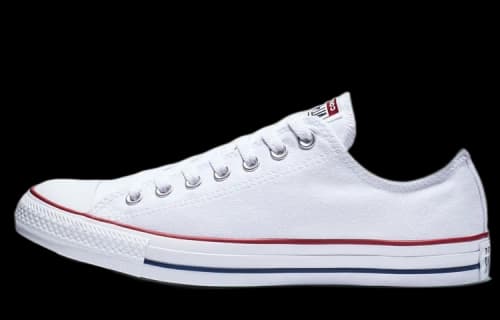
Two classics that sit a full UK size apart at the same European number. Each page lists the sizes every shop still has, in that shop's own numbering.